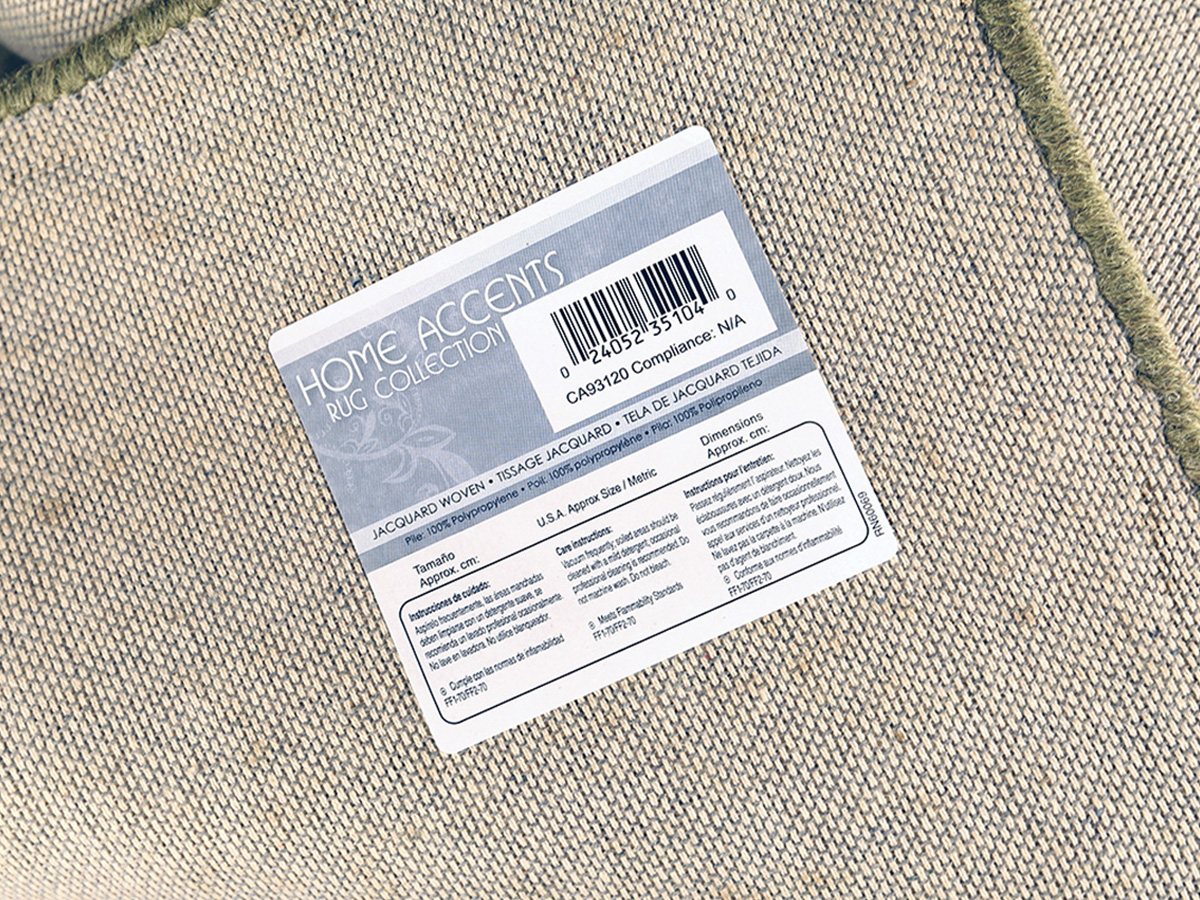
Why sell rug labels? Not only is the market huge—$5.4 billion and growing—but the cross-well possibilities are enormous. If you can sell rug labels, you can sell into any commercial fabric market that requires labeling. This opens doors to new areas of business that you might not otherwise have.
Even without the cross-sell opportunities, the market is vast. Demand for polyester-based decorative rugs alone is predicted to surpass 3 billion square feet by 2028, with a projected value of $5.4 billion. That’s a lot of indoor, outdoor, area, and room rugs, and demand is expected to remain steady and growing at 6% CAGR.1
What do rug labels do?
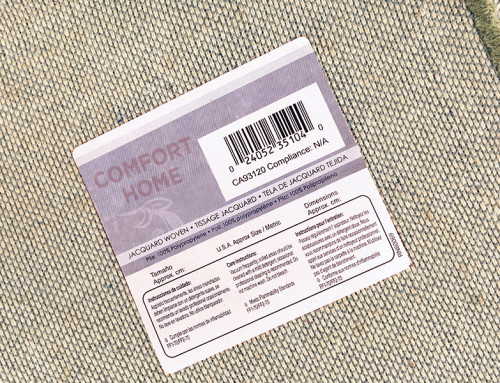
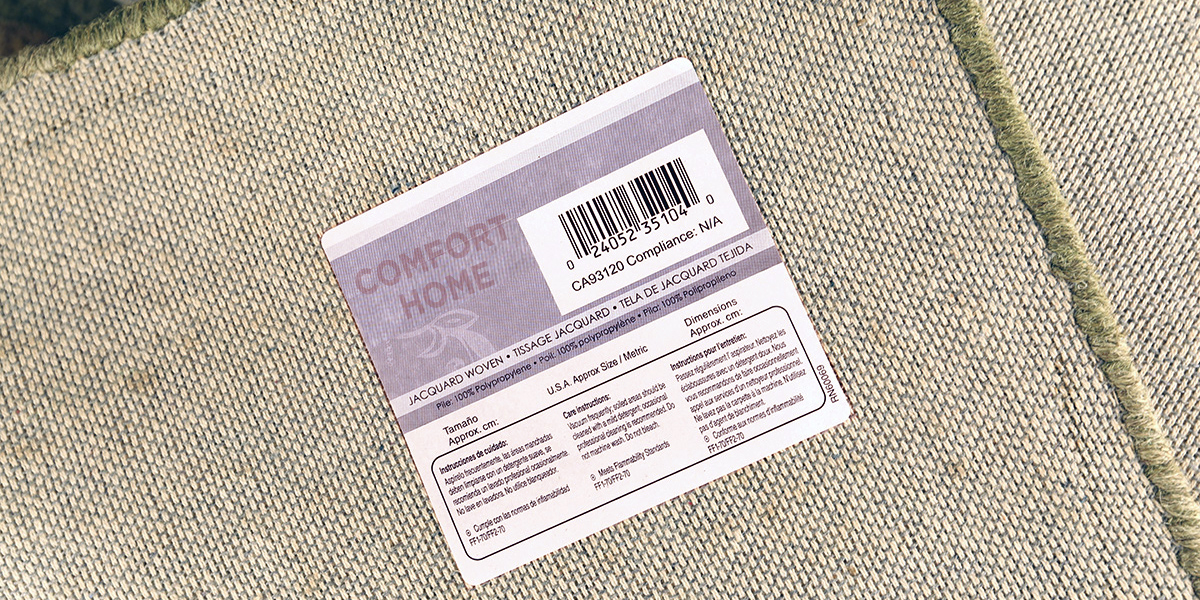
First and foremost, rug labels communicate details such as color and size, and provide manufacturing history. They can be used for in-house inventory and manufacturing purposes, designed with serialized or nonserialized barcodes for product tracking.
Well-crafted labels can also communicate branding, allowing your clients to communicate with their customers in a permanent yet elegant way. They can be die cut into unusual and attractive shapes, include logos, and add sophistication with attractive fonts.
Whether rug labels are sewn-in, heat sealed or adhered with permanent self-adhesive, they will be part of the product for years.
3 Levels of Opportunity
The opportunities in rug labels exist at three different levels:
- Wholesale carpet logs (before the logs are cut and bound into individual retail products).
- Retail products (prior individual sale).
- Samples (used to identify the millions of product samples used by retail outlets all over the country).
Figure out the intricacies of selling this product and you can apply that knowledge to a vast number of other applications, from shade awnings to safety harnesses and mattresses. Suddenly, you’ll start seeing opportunities everywhere.
Types of Rug Labels
There are three primary types of rug labels:
Heat Seal: Designed to adhere permanently to the carpet backing using heat to seal it in place.
Sew-in: Constructed of a nontearable synthetic tag material that cannot be removed unless purposely cut out.
Pressure-Sensitive: Constructed as peel and stick, with highly aggressive adhesive designed to adhere to the carpet backing. Pressure-sensitive labels are less durable but are the fastest to apply.
Important to Get It Right
What makes these sales sticky—as many labeling sales are—is that they require the expertise that a distributor brings. In much the same way as security labels or HazCom
labels, you can’t just buy any old label, print it, and put it on there. Rugs are manufactured with a variety of backings, with different textures and chemical compositions, and each requires the right combination of substrate and application process so to stay on the product anywhere from months to years.
This takes R&D, and lots of it. The last thing any client needs is to choose an adhesive not well matched to backing, and when the rugs arrive at the retail location, find them falling off at their destination; or choose a thinner substrate to save money, only to find that the rug arrives at the retail location with the sew-in labels shredded into pieces by the backing needles as if someone had gone at them with a mini buzz-saw.
This is where you can find opportunities when others have gotten it wrong. Because you’re working with Wise, you can lean into our expertise. We have years of R&D under our belts to help you help your client to make the right decisions to balance cost, turnaround, and application.
Huge Cross-Selling Opportunities
Once you’ve got the process down, you can take that eye for these labels into any customer location, even those outside the rug industry. Doors open with pretty much any product that uses heavy-duty commercial fabric or canvas. This includes deck or retractable umbrellas, dust covers for outdoor furniture, and even safety harnesses.
When you walk into a customer’s location, look around. What other items do they produce? Ask questions. The same sew-in technology used to make rug labels is used to make labels for a wide variety of other products.
Rug labels are great opportunities for distributors to solidify recurring revenue in a growing market, then capitalize on their new expertise to break into new customer relationships and cross-sell into existing ones.
Didn’t know rug labels offered so many opportunities? Now you do.
___________________________________________________________________
Have a tricky rug or industrial fabric application? Contact us! We’ll put our decades of experience to work.
____________________________________________________________________
Check out the rest of our blogs.
Newsletter Opt-In
Every two weeks, we will provide you with what we hope is valuable content that will help you run your business and make more profit. In our newsletter, you will receive product updates, educational blog alerts, and company news. You can unsubscribe at any time.